

The Remote Work Bait-and-Switch

Let me start by saying this straight off the bat for those of you who may not be as familiar with me: I'm a remote work enthusiast. An evangelist, as it were. I preach the gospel of working from home like some sort of demented, caffeine-fuelled, Internet-connected John the Baptist (yes, I know who John the Baptist was. You don’t need to die of shock. Jerks). In fact, I'm so passionate about the topic that you might catch me on a soapbox at the local park or even the rare podcast or two, extolling the virtues of a good home-office setup to any passing dog walker who'd listen.
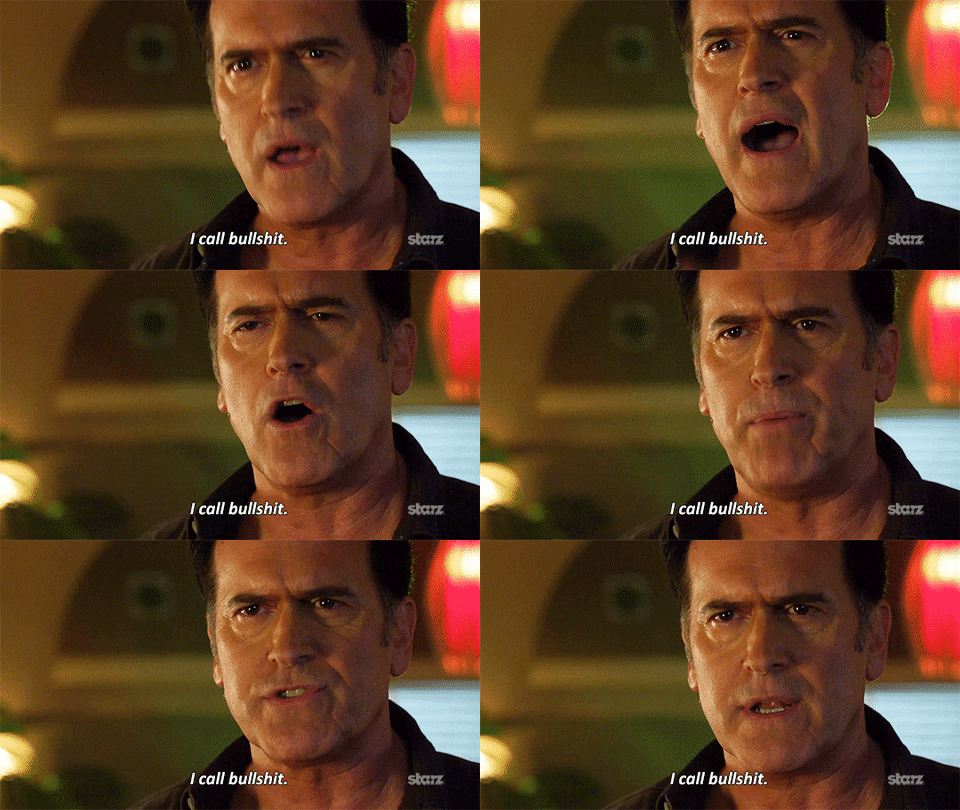
So given my fervor for flexible work arrangements, you can probably guess my feelings about the recent trend of companies who had promised a remote work setup only to yank those benefits away like a proverbial rug. It's not just a disappointment—it's a straight-up bait-and-switch. It's a breach of trust. It's, frankly, complete and utter bovine excrement.
(Pssst: That means:)
Now, don't get me wrong, I respect a company's right to dictate its operational structure. If a business believes that having its employees under one roof will boost productivity or foster a stronger team culture, that's their prerogative.
I mean . . . they’re wrong.
And study after study after study says so.
But they have the RIGHT to be wrong. It’s extremely easy and understandable to want to return to the familiar after something as upsetting as the COVID pandemic, and even more so when making a move like that could save your company millions of dollars and potentially some decision makers somewhere their jobs, at least on paper.
I get it! We all do.
However, there is some problem with that math. If you as a company have committed to keeping your workforce remote, you have a responsibility to follow through and employees remember things like this. Employees take these promises seriously. They make life-altering decisions based on these commitments. They might move out of expensive city centres to more affordable or tranquil areas. They might adjust their work-life balance, spending more time with family or pursuing personal interests. They might have HAD families based off of the idea that they would be able to spend time that they wouldn’t have been able to if commuting and locked in a cubicle farm all day. They might even turn down other job offers, ones with similar promises of remote work.
So when you, the company, suddenly decide to claw back that promise and insist everyone return to the office? That's not just reneging on a deal. That's messing with people's lives. It's about as ethical as you can get. It’s upending whole swathes of peoples’ entire lives and forcing them to choose between you and themselves.
A Call to Accountability
Call me reactionary, but I believe that companies that are engaging in this kind of bait-and-switch tactic need to be called out. They need to understand the gravity of their actions. They need to realise that their broken promises have real-world and real-life consequences for their employees and their reputations.
In a world where corporate responsibility and transparency are (oh dear god please) increasingly being valued, these companies risk alienating not only their workforce but also their customers. After all, if a company can't keep its word to its employees, can it be trusted to deliver on its promises to its customers?
The Way Forward
My message to companies considering such a move: Don't be that guy.
Don't be the employer who jumps all over short-term convenience rather than long-term trust. Don't be the corporate equivalent of the shady used car salesman, promising one thing and delivering another.
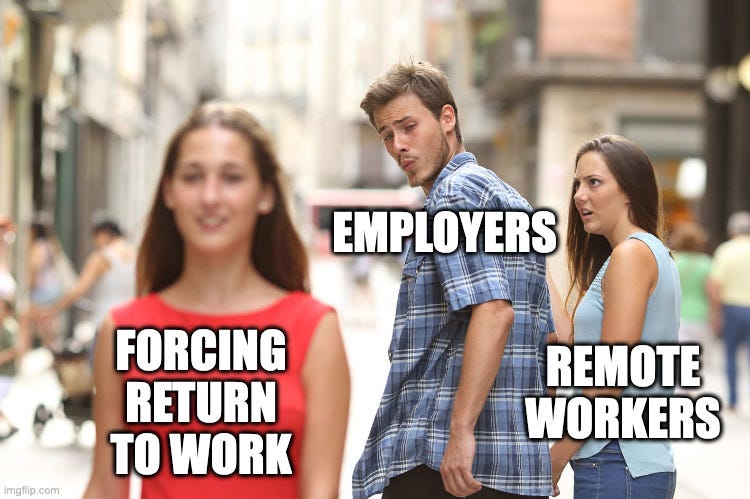
If you've committed to remote work, stick with it. If circumstances force you to reconsider, engage in open dialogue with your employees. Explain the situation. Explore alternatives. Look for compromise. Be transparent, be respectful, and above all, be honest.
We live in a rapidly changing world. Remote work is no longer a perk or a promise—it's a necessity for many, a lifeline. Companies that understand this, that respect their commitments and value their employees, are the ones that will thrive in the future.
In short, don't bait-and-switch. Don't be a purveyor of bovine excrement. Be better. Because your employees—and the world—deserve better. In the words of the man himself, Wil Wheaton: Don’t be a dick.