

Leading Without Trust
What to do when your team is on fire and the walls are on fire and everything is on fire and OMG, is this hell?!

Post Publish Edit: This article was scheduled to publish at the end of my Support Driven EU Summit 2026 talk on the same subject on Thursday, 4 June 2026. In what can only be described as a hilarious (in hindsight) comedy of errors, I aggravated an old injury not once but twice the day before. I still wanted to give my talk but could barely stand upright . . . without the help of modern pharmacology. I’m sure you can guess where this is going!
I assume that my talk was a lesson in taking care of your body and classifying public speaking as heavy machinery (because, along with driving forklifts, one should definitely not try and deliver speeches if the medication bottle has a “do not operate heavy machinery” warning). I say “I assume” because I don’t particularly remember it, besides actively telling everyone what was going on. Because: Transparency.
The point is: Don’t be bouncers kids. Practice good ergonomics. And no, you should NOT try and do a flip. There are no winners in that one. Also, here’s the actual article for those who may have missed the point of it while I was talking about . . . whatever . . . on Thursday! 😂
If we haven’t met yet, hi. Welcome. My name is Ash and I am a sort of CX fixer.
I am the guy who gets called when there either isn’t a customer-facing team (or set of operations processes, or any other number of missing things) or, if they are there . . . something has gone wrong. REALLY wrong.
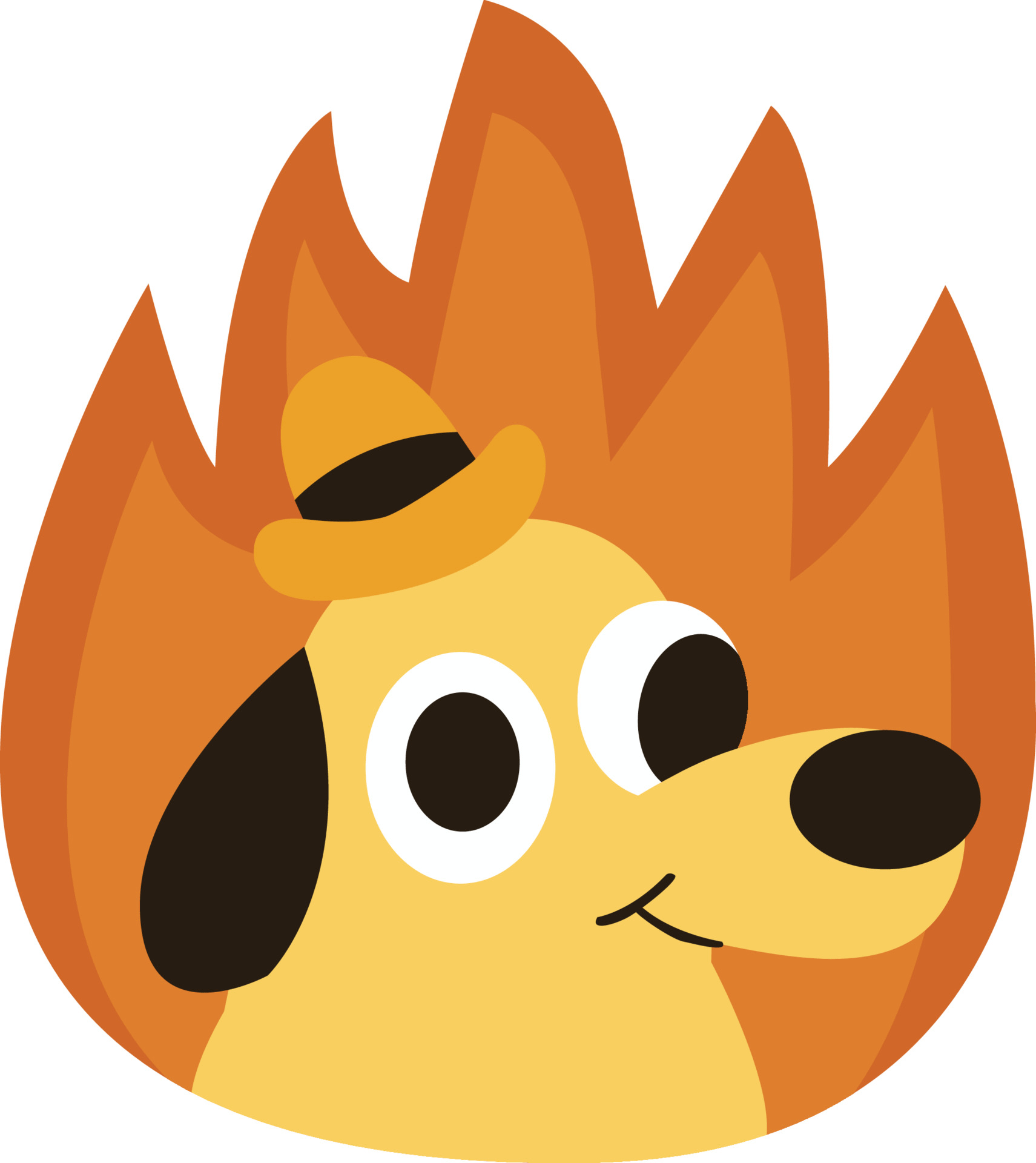
I have been doing this for pushing twenty years; walking into organisations where the Thing is broken, underfunded, or starting from zero, and being handed the keys. And sometimes, walking through that door for the first time, I have indeed thought: “Oh dear god, what have I gotten myself into? Is this what hell looks like?”
To be clear, most of the teams that I work with are traumatised, not hostile.
There is a difference and if you do not understand it, you might end up spending months making things worse while believing you are fixing them. Hostility means the team has decided that you specifically are the problem. Trauma means the team has learned over the months or years that things just don’t get better. That speaking up gets you nowhere, and that the most rational thing to do is to stay quiet, do the work, and protect yourself.
These folks have been through things before you arrived that are all going to impact their relationship with you. It might have been leaders who made big promises that were not (and could not have been) delivered. Decisions that were made above their heads or in spite of their protests, or even without their knowledge. Reorgs. Redundancies. Improvement initiatives launched with fanfare and abandoned six weeks later. The team remembers all of it.
And then here we all come, walking through the door as the new face of the exact same organisation that made those decisions, the most recent in a long line of new promises. The resentment, the suspicion, the low-grade hostility that you feel rolling off of the team? We’re not imagining it, but it’s also not about us either. We just happen to be wearing the uniform.
The problem is that fixing it is going to take a hot minute and that if we’re not careful, the low trust levels will hide. Low trust doesn’t always look like what it is. It can look like cooperation and acceptance.
That’s what catches a lot of us out. We go to hold our first all-hands, we share our vision, say all the right things, and everyone . . . just nods. Nobody pushes back. Nobody challenges anything. No one volunteers a contrary idea or asks an uncomfortable question.
“They understand everything,” you think. “I’ve already won them over.”

We have not, alas, won them over. What we are seeing is fawning.
I’m not going to dive too deep into this (mostly because I’m in no way qualified to do so), but there is a framework from trauma psychology: fight, flight, fawn, or freeze. When people feel unsafe, these are the responses available to them. Teams in low-trust environments almost never fight - it costs too much, they rarely flee - they need the job, and they can’t really freeze - the nature of work prevents that. What they do is fawn. They tell us what they perceive we want to hear. They smile and nod. They agree in the meeting and say nothing in the corridor. Sound familiar?
Please remember that this is not malice. Caution has just been trained into them because it feels so much safer. Before you say “but I would never make them feel unsafe”, I know. Of course you wouldn’t. But in all honestly, neither would the person before you. None of us are monsters. That is kind of the point.
So there are two things we cannot do when we inherit a team like this.
The first is demand trust. The best we can do is ask for it. We can explain why people should give it. We can make our case. And the team will listen politely and continue fawning, because people who have learned not to trust do not un-learn that by being told to. The harder we push for it, the more they pull back. I have done this. I have watched the team get more polite in proportion to how hard I was trying to break through, and I missed it for about three weeks before someone I trusted told me plainly what was happening. It is exactly like the movie version of a new stepdad who cannot understand why the kids are not warming to him. The relationship is not repairable on the timeline he has in his head, and it isn’t repairable on any specific timeline that we have either.
Because the second thing we cannot do is speed it up. I know. Timelines exist. The quarter has goals. The VP is watching. Trust, unfortunately, does not care. We have to pour the concrete foundation and let it set. If we try and build on it before it sets, the whole structure is going to fall in.
The only path is to behave consistently enough for long enough that trust becomes possible again.
How?
I’m so glad that you asked.
Make honesty the way. I believe in radical honesty with my teams. The kind that includes saying “I cannot share that yet” instead of giving a softened, half-true version of the thing. People who have been in low-trust environments are finely calibrated for detecting bullshit. They will catch you in a half-truth far faster than you think and way WAY faster than you would like. An honest “I cannot tell you this right now” is infinitely better than a vague answer that falls apart under scrutiny. One untruth (and active lie or a lie by omission), and you are back at square one.
Make your promises smaller. Every leader walks in wanting to make big promises. Do not. Make promises you can keep in one week, and then keep them. “I will find out and let you know by Friday.” Then . . . you know . . . actually do that. Find out, and let them know, by Friday. The accumulation of these tiny followed-through commitments is what trust is actually built from.
Make decisions visible. Anything that affects the team, announce it promptly, clearly, and in writing. Not after the fact. Not as a rumour. Not buried in a monthly all-hands. The people on your team have experienced too many decisions that happened to them without warning. Show them a different pattern.
Make fairness demonstrable. The same rules for everyone, and most especially for yourself. If you hold the team to a standard you do not hold yourself to, they will notice. They always notice. Fairness has to be public, not just intended.
I know, right? None of this is complicated. It’s almost disappointingly simple. And even more upsetting, all of it is slow.
Trust rebuilds over weeks and months. Sometimes it does not rebuild at all. We do everything right and some people have been through too much and they leave, or stay quietly checked out, and there is a version of this work where that outcome is the best you can achieve.
Our job is not to be trusted. Our job is to be trustworthy long enough for people to realise that we are, in fact, worthy of it. The trust is theirs to give. All we can control is whether we deserve it.
That is the whole message, really. The rest is just the work.